
2023 Ford F-150 Manual: A Comprehensive Guide

This guide offers detailed insights into your 2023 F-150, covering operation, maintenance, and safety features, with the latest updates available online or in PDF format.
Welcome to the comprehensive owner’s manual for your 2023 Ford F-150! This resource is meticulously designed to familiarize you with all aspects of your vehicle, ensuring a safe, enjoyable, and informed ownership experience. It’s more than just a guide; it’s your key to unlocking the full potential of your F-150.
This manual contains the most current information available at the time of publication, though Ford reserves the right to make changes to specifications and features. Always refer to the online version for the absolute latest details, as updates are frequently implemented. Whether you prefer a downloadable PDF or an interactive online experience, accessing this information is simple and convenient.
Understanding your vehicle’s capabilities and proper operation is paramount. This manual will guide you through everything from basic controls to advanced technologies, empowering you to confidently navigate any driving situation. Consider this your essential companion for years to come.
Where to Find the Official Manual (PDF & Online)

Accessing your 2023 Ford F-150’s official owner manual is straightforward and offers multiple convenient options. You can download a PDF version directly from the official Ford website, allowing for offline access and easy storage on your devices. Alternatively, an interactive online version is available, providing a clickable and searchable experience with potentially updated information beyond the printed copy.
To locate the manual, simply visit Ford’s owner website and search for “2023 F-150 Owner Manual.” Quick reference guides and supplemental materials, such as roadside assistance information, may also be available for download. Ford provides these resources to ensure you always have the most accurate and up-to-date information at your fingertips.
Remember, the online version may contain the very latest revisions, differing slightly from the original printed manual included with your vehicle.
Understanding Manual Updates & Revisions
Ford continuously improves its vehicles and documentation. Therefore, the 2023 F-150 owner manual is subject to updates and revisions even after your vehicle’s initial purchase. These changes reflect design modifications, new features, or clarifications based on real-world feedback and testing.
The online version of the manual is typically the most current resource, often incorporating updates that haven’t yet been printed. Ford reserves the right to change specifications, design, or equipment without prior notice. It’s crucial to regularly check the official Ford website for the latest version to ensure you have accurate information regarding your F-150.
Differences between the printed manual and the online version may exist, so prioritize the online documentation for the most up-to-date guidance on operating and maintaining your vehicle.

Key Features & Systems Explained
Explore detailed explanations of the 2023 F-150’s engine, transmission, drivetrain, and braking systems, empowering you with comprehensive knowledge of your truck’s capabilities.
Engine Specifications & Performance
The 2023 Ford F-150 boasts a diverse range of engine options, catering to various needs and preferences. These include a 3.3L Ti-VCT V6, a 2.7L EcoBoost V6, a 5;0L Ti-VCT V8, and the high-output 3.5L EcoBoost V6, plus a PowerBoost Full Hybrid option. Each engine delivers unique performance characteristics, from efficient daily driving to substantial towing and hauling capabilities.
Horsepower and torque figures vary significantly depending on the chosen engine. The 3.3L V6 provides a solid foundation, while the EcoBoost engines offer enhanced power and efficiency. The 5.0L V8 delivers classic V8 performance, and the 3.5L High-Output EcoBoost is designed for demanding tasks. The PowerBoost hybrid combines electric motor assistance for increased torque and improved fuel economy. Understanding these specifications is crucial for optimizing your F-150’s performance based on your specific requirements.
Transmission Options & Operation (Manual Focus)
While the 2023 Ford F-150 primarily features automatic transmissions, understanding the available options is key. The standard transmission is a 10-speed automatic, paired with most engine choices, offering smooth and efficient shifting. However, it’s important to note that a manual transmission is not offered for the 2023 F-150 model year.
The 10-speed automatic is designed to optimize performance and fuel economy across various driving conditions. It features selectable drive modes, including Normal, Sport, Tow/Haul, and Snow/Wet, allowing drivers to tailor the transmission’s behavior to their needs. Proper operation involves understanding the gear selector positions (P, R, N, D, M) and utilizing the manual shift function for greater control when desired. Though a manual isn’t available, mastering the automatic’s features enhances the driving experience.
Drivetrain Systems: 4×2, 4×4, and Electronic Locking Rear Differential
The 2023 Ford F-150 offers versatile drivetrain options to suit diverse needs. The standard configuration is 4×2, ideal for everyday driving and maximizing fuel efficiency. For enhanced traction in challenging conditions, available 4×4 systems provide superior performance off-road and in inclement weather. These systems typically include an electronic shift-on-the-fly function, allowing seamless transitions between 2H, 4H, and 4L modes.
Further enhancing off-road capability is the available electronic locking rear differential. This feature forces both rear wheels to spin at the same speed, providing maximum traction when one wheel loses grip. Understanding when and how to engage the locking differential is crucial for navigating difficult terrain. Proper usage, as detailed in the owner’s manual, ensures optimal performance and prevents potential damage to the drivetrain components.
Braking System & Anti-Lock Brake System (ABS)
Your 2023 Ford F-150 is equipped with a robust braking system designed for reliable stopping power. The system incorporates disc brakes on all four wheels, providing consistent performance. Crucially, the Anti-Lock Brake System (ABS) prevents wheel lockup during hard braking, allowing you to maintain steering control and potentially shorten stopping distances.
Understanding ABS operation is vital. A pulsating sensation in the brake pedal during ABS activation is normal – maintain firm, continuous pressure. The owner’s manual details the ABS indicator light and what it signifies if illuminated. Regular brake inspections, as outlined in the scheduled maintenance section, are essential for optimal performance and safety. Familiarize yourself with the braking system’s components and proper usage for confident driving in all conditions.
Driving & Operating Your F-150
Mastering your F-150 involves understanding starting/stopping, steering, and the instrument cluster; the manual provides detailed guidance for safe and efficient operation.
Starting & Stopping Procedures
Initiating your 2023 F-150 requires a properly functioning key or the keyless start system, ensuring all accessories are off to conserve battery power. Insert the key and turn it to the ‘start’ position, or depress the brake pedal and press the start button. Allow the engine to fully engage before shifting into gear.
When stopping, gently apply the brakes to bring the vehicle to a controlled halt. Engage the parking brake, especially on inclines, to prevent rolling. The manual details proper shutdown procedures, including turning off accessories and ensuring the transmission is in ‘Park’ before switching off the ignition. Familiarize yourself with these steps for safe and reliable operation, referencing the owner’s manual for specific details related to your vehicle’s configuration.
Remember to consult the official 2023 F-150 owner’s manual for comprehensive instructions and safety precautions regarding starting and stopping procedures.
Steering & Suspension System Overview
The 2023 F-150’s steering system utilizes either electric power-assisted steering (EPAS) or traditional hydraulic steering, depending on the configuration. EPAS adjusts assistance based on vehicle speed, enhancing maneuverability at low speeds and stability at higher speeds. The manual details the components and operation of each system.
The suspension is designed for both on-road comfort and off-road capability, featuring independent front suspension and a multi-link rear suspension. Different suspension packages are available, impacting ride quality and payload capacity. Understanding the suspension’s role in handling and stability is crucial for safe driving.
Refer to the owner’s manual for detailed diagrams and explanations of the steering and suspension components, as well as recommended maintenance procedures to ensure optimal performance and longevity.
Understanding the Instrument Cluster & Warning Lights
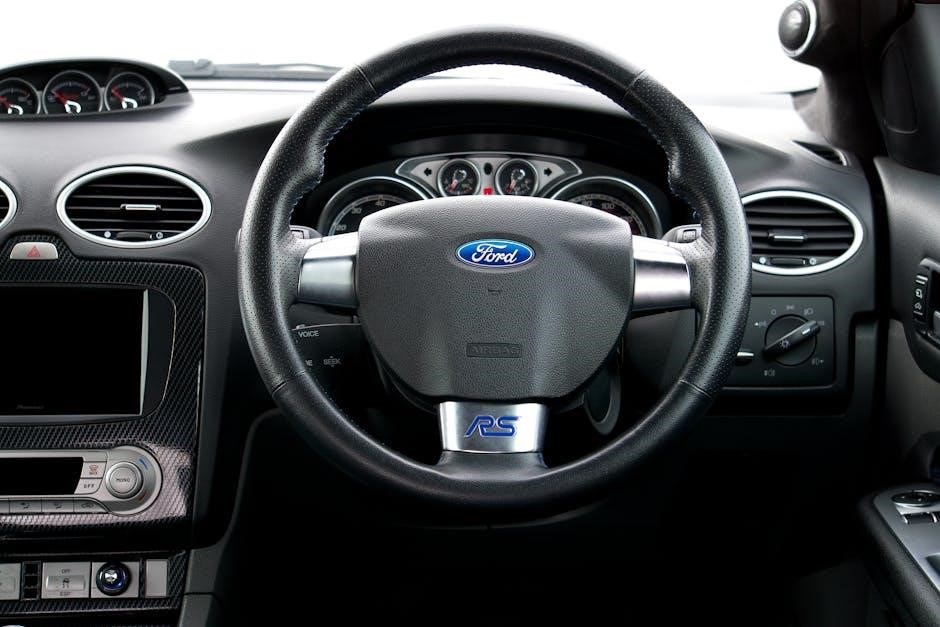
The 2023 F-150’s instrument cluster provides vital information regarding vehicle operation, including speed, engine RPM, fuel level, and temperature. Many models feature a digital display configurable to show various data points. Familiarize yourself with the layout and functions described in the owner’s manual.
Warning lights illuminate to indicate potential issues requiring attention. These range from minor reminders (like low fuel) to critical warnings (like engine malfunction). The manual provides a comprehensive explanation of each light’s meaning and recommended actions. Ignoring warning lights can lead to more serious problems.
Regularly check the instrument cluster during operation and consult the manual for any unfamiliar indicators. Promptly addressing warning lights ensures vehicle safety and prevents costly repairs.
Using the Gear Shifter & Manual Transmission Controls
For 2023 F-150 models equipped with a manual transmission, mastering the gear shifter and associated controls is crucial for smooth and efficient driving. The shifter allows selection between gears, including reverse, neutral, and various forward gears. Understand the shift pattern illustrated in your owner’s manual.
Proper clutch operation is essential. Fully depress the clutch pedal before shifting gears to disengage the engine from the transmission. Release the clutch smoothly while simultaneously applying throttle to avoid stalling or jerky movements. Practice makes perfect!
Familiarize yourself with any auxiliary controls, such as hill start assist, which can aid in preventing rollback on inclines. Refer to the manual for detailed instructions and safety precautions regarding manual transmission operation.

Maintenance & Care
Regular upkeep, including fluid checks, tire maintenance, and scheduled servicing, ensures your 2023 F-150’s longevity and optimal performance, as detailed in this manual.
Scheduled Maintenance Intervals
Maintaining your 2023 Ford F-150 requires adherence to a specific schedule to ensure peak performance and reliability. This manual outlines crucial intervals for various services, categorized by mileage or time, whichever comes first.
Essential services at regular intervals include oil and filter changes, tire rotations, and comprehensive multi-point inspections. More extensive maintenance, such as fluid replacements (coolant, transmission, brake fluid), spark plug replacement, and belt/hose inspections, are scheduled at higher mileage milestones.
Ford recommends following the “normal” or “severe” service schedule, depending on your driving conditions. Severe conditions include frequent towing, off-road driving, or short trips in extreme temperatures. Consult the manual’s detailed chart for precise intervals and service requirements, guaranteeing your F-150 remains in optimal condition for years to come.
Fluid Checks & Replacements (Engine Oil, Coolant, Transmission Fluid)
Regular fluid maintenance is critical for your 2023 F-150’s longevity. This section details checking and replacing essential fluids. Engine oil should be checked monthly and replaced according to the scheduled maintenance intervals, using the specified viscosity grade.
Coolant levels must be maintained to prevent overheating; inspect the reservoir regularly and replenish as needed with the correct Ford-specified coolant. Transmission fluid is vital for smooth shifting; check the level and condition, replacing it at the recommended intervals to avoid costly repairs.
The manual provides specific instructions for each fluid, including location, checking procedures, and recommended replacement types. Ignoring fluid maintenance can lead to significant engine and transmission damage, so diligent attention to these checks is paramount for reliable operation.
Tire Maintenance: Pressure, Rotation, & Replacement
Proper tire care significantly impacts your 2023 F-150’s handling, fuel efficiency, and safety. Tire pressure should be checked monthly and adjusted to the values listed on the door jamb placard – never exceed the maximum pressure indicated on the tire sidewall.
Regular tire rotation, typically every 5,000-7,500 miles, promotes even wear and extends tire life. The manual details the recommended rotation pattern for your F-150’s drivetrain. Tire replacement should occur when tread depth reaches the minimum legal limit or if damage is present.
The owner’s manual provides guidance on selecting appropriate replacement tires and understanding tire markings; Neglecting tire maintenance can compromise safety and lead to premature tire failure, so consistent attention is crucial.
Battery Maintenance & Jump Starting Procedures
Maintaining your 2023 F-150’s battery ensures reliable starting and optimal vehicle performance. Regularly inspect the battery terminals for corrosion and clean them with a baking soda solution if necessary. Keep the terminals tight and protected. The manual details the battery’s location and specifications.
If your battery is discharged, the owner’s manual provides detailed jump-starting procedures. Always follow the correct polarity (positive to positive, negative to ground) and use appropriate jumper cables. Incorrect jump-starting can damage your vehicle’s electrical system.
The manual also outlines safety precautions during jump-starting and recommends professional assistance if you are uncomfortable performing the procedure. Ignoring these guidelines could lead to injury or vehicle damage.
Safety Features & Systems
Explore the advanced safety technologies within your 2023 F-150, including airbags, Ford Co-Pilot360™, and stability control, detailed in the owner’s manual.
Airbag System & Safety Restraints
Your 2023 Ford F-150 is equipped with an advanced airbag system designed to provide crucial protection during various collision scenarios. This system includes frontal airbags for both driver and passenger, as well as side-impact airbags and a safety canopy system covering front and rear outboard occupants. Understanding how these components function is paramount for maximizing safety.
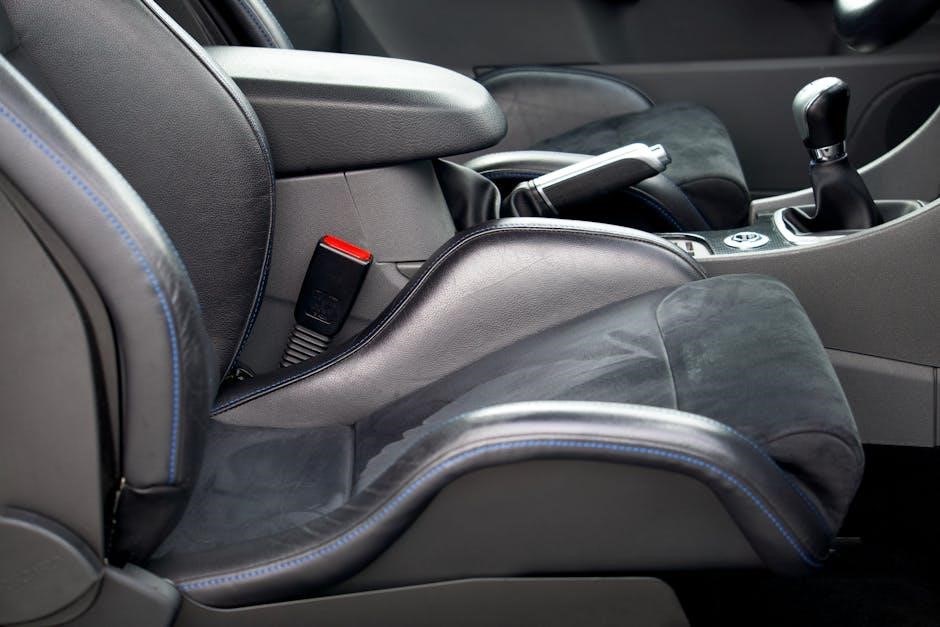
The owner’s manual provides detailed illustrations and explanations of the airbag system’s locations and deployment characteristics. It’s essential to familiarize yourself with the proper use of safety restraints, including seat belts, which work in conjunction with airbags to minimize injury. The manual also outlines specific warnings and precautions regarding airbag functionality, such as the risks associated with placing rear-facing child seats in front of active airbags.

Furthermore, the guide details the system’s indicators and what they signify, allowing you to quickly assess the operational status of the airbags. Proper maintenance and adherence to the guidelines outlined in the manual are vital for ensuring the airbag system’s reliability and effectiveness throughout the vehicle’s lifespan.
Ford Co-Pilot360™ Technology Overview
The 2023 Ford F-150 incorporates Ford Co-Pilot360™, a suite of advanced driver-assist technologies designed to enhance safety and convenience. This system includes features like Pre-Collision Assist with Automatic Emergency Braking, which can help mitigate or avoid collisions with vehicles and pedestrians. Lane-Keeping System assists in keeping the vehicle within its lane, while Blind Spot Information System (BLIS®) alerts you to vehicles in your blind spots.
The owner’s manual provides a comprehensive explanation of each Co-Pilot360™ feature, detailing its operation, limitations, and settings. It’s crucial to understand that these technologies are assistive and do not replace attentive driving. The manual clarifies how to properly utilize features like Adaptive Cruise Control with Stop-and-Go, and the 360-Degree Camera for improved visibility.
Detailed diagrams and troubleshooting tips are included, ensuring you can maximize the benefits of Ford Co-Pilot360™ while maintaining safe driving practices. Regular review of the manual is recommended to stay informed about system updates and optimal usage.
Emergency Brake Assist & Stability Control
The 2023 F-150 is equipped with Emergency Brake Assist (EBA) and AdvanceTrac® with Roll Stability Control (RSC), crucial safety systems detailed in your owner’s manual. EBA detects emergency braking situations and automatically applies maximum braking force, potentially shortening stopping distances. RSC utilizes sensors to detect potential loss of control and selectively applies brakes to individual wheels, helping maintain stability.
The manual thoroughly explains how these systems function, including indicators on the instrument cluster that signal activation. It emphasizes that while these systems enhance safety, they don’t eliminate the need for careful driving. Understanding the limitations of EBA and RSC is vital, particularly in adverse weather conditions.
Detailed instructions cover scenarios where these systems may intervene, and guidance on responding appropriately. The manual also outlines maintenance considerations and potential troubleshooting steps, ensuring optimal performance of these critical safety features.
Child Safety Seat Installation & Guidelines
Your 2023 F-150’s owner’s manual dedicates a significant section to the proper installation and use of child safety seats, adhering to all federal motor vehicle safety standards. It provides detailed diagrams illustrating LATCH (Lower Anchors and Tethers for Children) system locations and proper tether anchor point usage. The manual stresses the importance of following both the vehicle’s instructions and the child safety seat manufacturer’s guidelines.
Specific instructions are given for different types of child restraints – rear-facing, forward-facing with harness, and booster seats – outlining age, weight, and height requirements. The manual also cautions against improper installation, which can significantly reduce the seat’s effectiveness in a crash.
Furthermore, it details best practices for securing the seat, checking for stability, and understanding the vehicle’s airbag system in relation to child passenger safety. Always consult the manual for the most up-to-date information.

Troubleshooting & Common Issues
This section details solutions for warning lights, starting problems, and flat tires, alongside warranty details, ensuring quick resolution of typical 2023 F-150 concerns.
Common Warning Light Meanings & Solutions
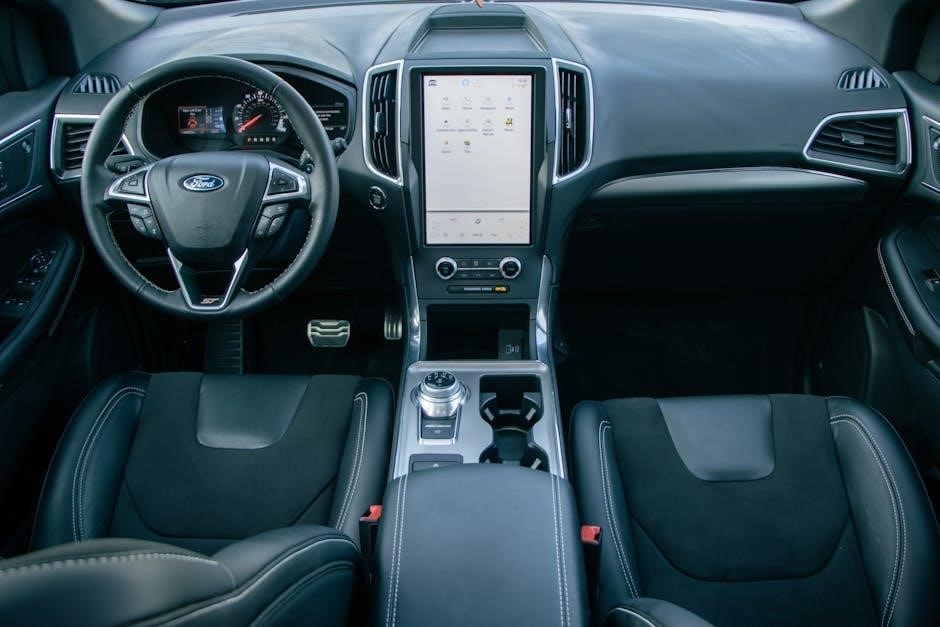
Understanding your F-150’s warning lights is crucial for preventative maintenance and safe operation. The Check Engine light indicates potential engine or emissions system issues – schedule a diagnostic scan immediately. A flashing Check Engine light signifies a severe problem requiring immediate attention. The ABS light signals a malfunction in the anti-lock braking system; braking functionality may be reduced.
The low tire pressure light indicates insufficient pressure in one or more tires, impacting handling and fuel efficiency. Address this promptly by inflating tires to the recommended PSI. The battery light suggests a charging system issue; investigate the alternator and battery connections. Finally, the oil pressure light warns of critically low oil levels – stop the vehicle and check the oil immediately to prevent engine damage. Refer to the owner’s manual for a complete list and detailed troubleshooting steps for each warning light.
Basic Troubleshooting for Starting Problems
If your 2023 F-150 fails to start, begin with simple checks. Ensure the battery is adequately charged and connections are clean and tight. A weak battery is a common culprit. Next, verify sufficient fuel is present; listen for the fuel pump priming when the ignition is turned on. Check the starter motor – a clicking sound may indicate a faulty starter or solenoid.
Inspect the ignition switch for proper function. If equipped, confirm the anti-theft system isn’t activated. A flooded engine can also prevent starting; avoid pressing the accelerator while cranking. Consult the owner’s manual for specific fuse locations related to the starting system. If these basic steps don’t resolve the issue, professional diagnosis is recommended to avoid further damage.
Dealing with Flat Tires & Roadside Assistance
Encountering a flat tire requires immediate, safe action. Pull over to a level surface, away from traffic, and activate your hazard lights. Consult your 2023 F-150’s owner’s manual for the precise location of the spare tire, jack, and lug wrench. Ensure the parking brake is firmly engaged before attempting to change the tire.
Follow the manual’s instructions carefully for safe jacking and lug nut removal. If you’re uncomfortable performing the change yourself, or lack the necessary tools, don’t hesitate to utilize Ford’s roadside assistance program. Your owner’s manual contains contact information and details regarding coverage. Remember to have your vehicle identification number (VIN) readily available when requesting assistance.
Understanding Warranty Information & Coverage
Your 2023 Ford F-150 is protected by a comprehensive warranty, details of which are thoroughly outlined in your owner’s manual. This documentation specifies coverage periods for various components, including the powertrain, bumper-to-bumper systems, and specific parts. Carefully review the manual to understand what is covered, and for how long, as well as any exclusions or limitations.
Pay close attention to the requirements for maintaining warranty coverage, such as adhering to the scheduled maintenance intervals; Keep detailed records of all servicing performed on your vehicle. The manual also explains the process for filing a warranty claim, including required documentation and authorized service centers. Understanding your warranty ensures you receive the full benefits to which you are entitled.